促銷資訊載入中...
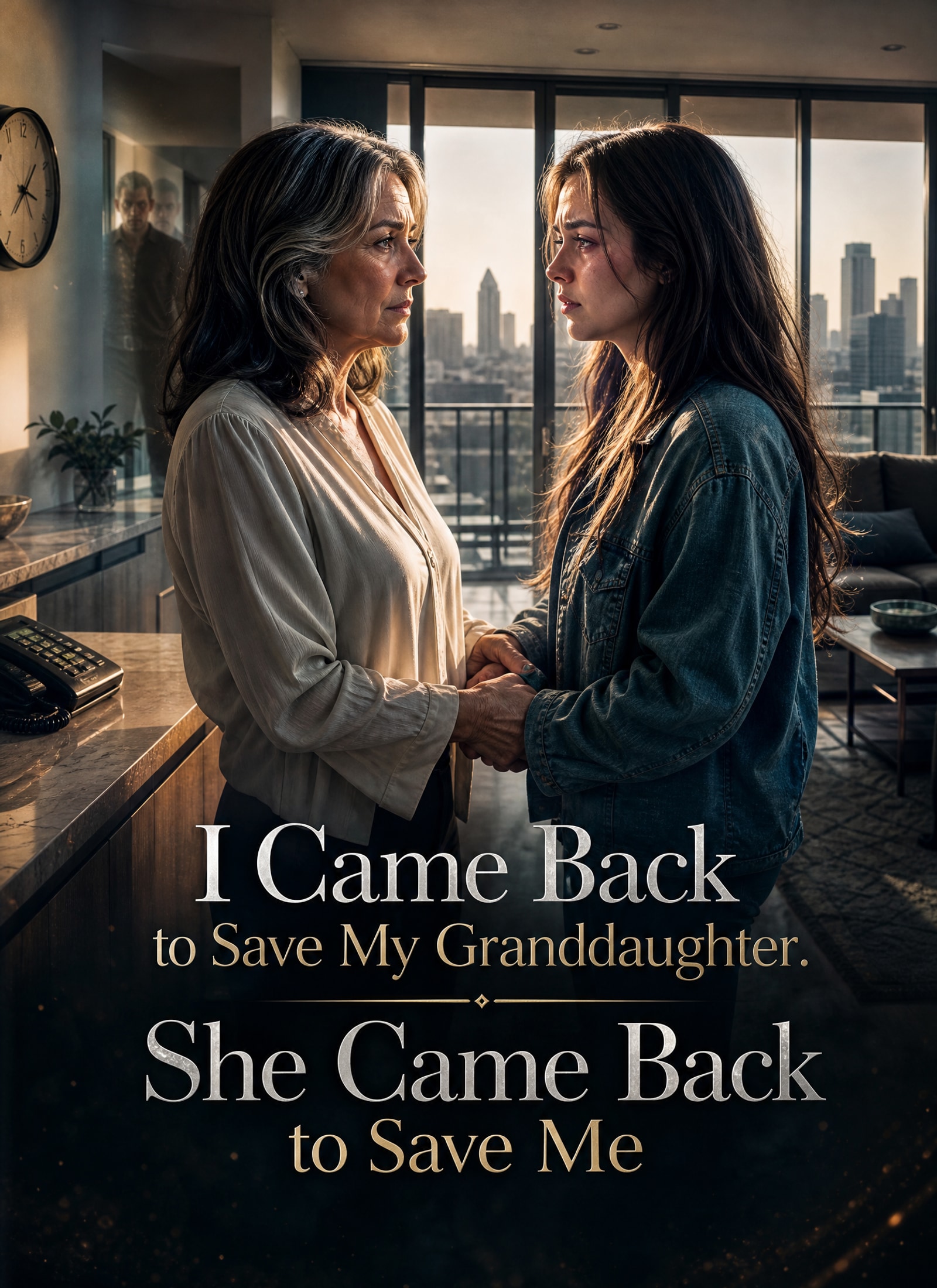
I Came Back to Save My Granddaughter. She Came Back to Save Me
 Novelix
new
已完結
I died as the grandmother everyone hated. After my eighteen-year-old granddaughter Anna was found dead, my own son accused me of driving her to it. The public turned on me, and I never got the chance ...
章節(2)
第1章
The second time my son begged me to look after his daughter, I remembered dying.
Not a dream of dying. The actual business of it: my heart contracting around a pain that would not release, my phone lighting up on the floor, strangers still telling me what a monster I was while I tried to draw one more breath.
Now the phone was in my hand. My heart was beating. Daniel was talking.
“Mom, please. Anna's taking the college rejections hard. Rachel's gone, and I haven't even found a way to tell her. I'm out of town dealing with everything. I need someone there.”
Exactly the same words.
I put my free hand against my chest.
In the life I remembered, I had packed a bag and gone to his apartment. I had quarreled with my granddaughter. I had stepped out to cool off.
By the time I came back, she was dead.
Daniel arrived almost immediately. He knelt beside her, looked up at me, and began to scream.
You hated her. You finally got what you wanted.
Someone filmed him. Someone found an old photograph of me wearing diamonds. Within days, I was the rich grandmother who had bullied a grieving teenager to death.
No explanation could travel as far as that image.
“Find someone else,” I said.
“Mom.”
“I'm sixty-four. I'm not equipped for this.”
“It's two days. She's your granddaughter.”
I ended the call.
My living room was as it had been that morning: a cup of coffee on the side table, an open book, sunlight falling across the rug. On the wall, the clock continued its small, indifferent work.
I checked the date three times.
Then Daniel called again.
“She's all I have left,” he said. His voice broke in precisely the place I remembered. “I've lost my wife. Don't make me lose my little girl too.”
I should have asked why he could not come home himself. I should have asked a great many things.
Instead, I thought of Anna at eighteen, forever eighteen, with people arguing over the reason she had died.
If I had been given this day again, perhaps I could get her through it.
“Two days,” I said.
Daniel exhaled. “Thank you. Thank you, Mom.”
He sounded relieved.
An hour later, I stood outside his high-rise apartment in Bellhaven with a small suitcase and a pulse that would not settle. The elevator doors closed behind me. At the end of the corridor, a window caught the Texas afternoon in a hard white square.
Anna opened the door before I could ring twice.
Her eyes were swollen. That was familiar. The way she stared at me was not.
She looked at my face, my hands, the suitcase. Then she reached toward my sleeve and stopped herself.
“Grandma?”
“Your father asked me to stay.”
I had never been gifted at comforting people. Still, I remembered what my indifference had supposedly done, and made an effort.
“Those rejection letters aren't a verdict on your life. You can take a year. Apply again. There are worse things than a delay.”
Her mouth trembled.
Excellent. I had been in the apartment for less than a minute and had apparently made her cry harder.
I brought my suitcase inside.
“We can talk about it after you've eaten.”
She shut the door but stayed beside it, watching me with something closer to horror than embarrassment.
“Why did you come back?” she whispered.
第2章
I had spent most of my life arranging matters so that nobody could demand very much of me.
People called that selfishness. I generally found the accusation saved time.
Before I married Richard Cole, I told him I did not want children. I told him early, and I told him plainly. Several men before him had decided this made me unsuitable. Richard took three days to consider it, then said he loved me more than he wanted a family.
I believed him.
A month after the wedding, I discovered I was pregnant.
When I confronted him, he would not meet my eyes. He admitted he had tampered with our contraception. Then, once the confession was out, he seemed almost offended by my reaction.
“You're my wife now,” he said. “Did you think that meant we were going to live like people on vacation forever?”
I asked for a divorce.
His pleasant voice vanished. His family closed around him. There were threats, apologies, promises that turned back into threats. I tried to regain control of a situation everyone else insisted had already been decided.
By the time I stopped fighting the pregnancy, exhaustion had something to do with it. So did the knowledge that the child had made none of these choices.
Neither feeling made me forgive his father.
A month after Daniel was born, I left. The eventual divorce gave Richard primary custody. I had money for a lawyer and money to live on; I was luckier than many women, and still the whole business left me feeling that my life had been taken apart and returned with pieces missing.
I went back to being Evelyn Mercer. Daniel stayed a Cole.
I did not take the baby with me.
There is no prettier way to write that sentence.
Richard wanted an heir. His parents wanted a grandson. I knew what I had to offer a child then, and it was not enough.
That did not make the decision painless. It made it mine.
Whatever they told Daniel about me, he grew up believing it. We had little contact. When he married, I sent him a hundred thousand dollars with a note that tried, rather clumsily, to acknowledge the years I had not been there.
After that, he remembered my telephone number.
When Richard and his parents died, Daniel began calling more often. We moved from being strangers to being polite acquaintances with shared blood. I met Rachel. I met their little girl. I bought birthday presents selected by assistants and asked questions whose answers I did not know how to remember.
I had never pretended this amounted to closeness.
Now that little girl stood in the kitchen, eighteen years old, holding a clean plate as though she had forgotten its purpose.
“Where does your mother keep the soup?” I asked.
“Second cabinet.”
I opened it. Neatly stacked cans, a packet of crackers, a shopping list in a handwriting I barely recognized. Rachel had apparently gone away to help an aunt. That was the story Daniel had given Anna.
I knew the woman was dead.
I did not know how to tell her daughter.
Anna set the plate down and rubbed at a mark that wasn't there.
“Grandma, I'm sorry.”
“You haven't done anything.”
She looked at me then, and I had the uncomfortable impression she knew more about me than I did about her.
“You don't understand,” she said. “It's about what happened afterward.”